
Allied Invasion of Sicily
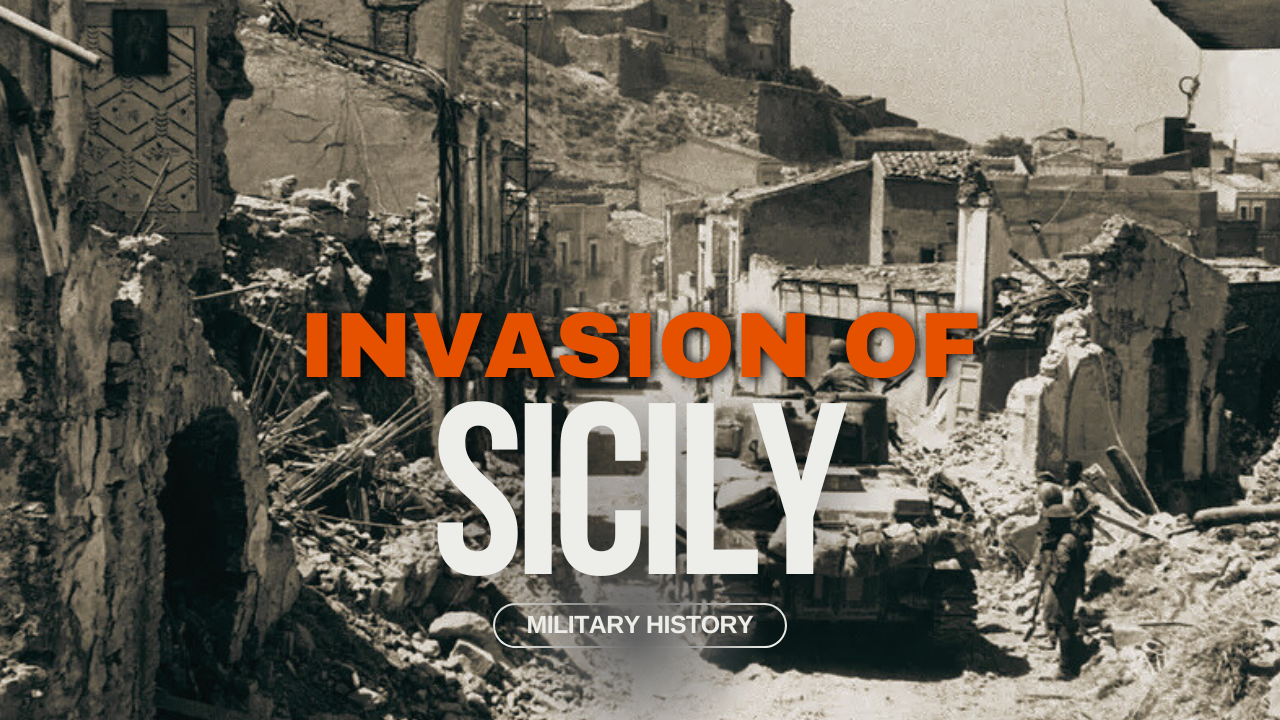
As the Second World War moved into his fifth year of conflict, Adolf Hitler’s assured vision of military supremacy had faltered badly over the past seven months. The defeat at Stalingrad in February of 1943 had cost the Nazis dearly, and after British Prime Minister Winston Churchill and U.S. President Franklin D. Roosevelt had made the defeat of the German U-boat menace a priority at their Casablanca Conference in January of that same year, by July, the Battle of the Atlantic had been tamed after German Kriegsmarine commander, Admiral Karl Donitz, had no choice but to order a U-Boat withdraw from the main convoy routes in the North Atlantic, due to heavy U-Boat losses caused by the Allies’ development of effective anti-sub destruction techniques. To further the winnowing of German morale and confidence, on May 13th, the Allies claimed total victory in their North Africa Campaign, when a quarter million German and Italian soldiers in Tunisia passed into Allied captivity. That same month, Churchill, Roosevelt and their military planning staffs met in Washington, D.C. at a conference codenamed Trident. For their part, the Americans wanted to invade northern France to secure a rapid end to the war, yet the British feared a bloodbath worse than the the trenches of WW1, instead lobbying for an attack on Italian dictator Benito Mussolini’s fascist regime, thereby insuring that Italian Axis forces would be eliminated prior to the D-Day invasion of Normandy under Operation Overlord. Given its size and location, as well as more than 30 airfields dotting the island, Allied war planners deemed Sicily to be a massive threat to air and sea routes within the Mediterranean Theater of Operations, but should Allied forces successfully secure the island from the Nazis, Sicily would make for a powerful air base and jumping off point for an invasion of Italy, thereby reducing pressure on Soviet forces on the Eastern Front, by diverting Axis troops into Italy for the protection of Germany’s foothold in southern Europe. After the decision was made to invade Sicily and Italy before implementing the D-Day invasions of northern France—still more than a year away—the Allies were about to embark upon one of the most contentious chapters of WW2—the Italian Campaign—and while the campaign would witness some early successes, the Italian Campaign would prove to be no easy victory, with some of the fiercest battles of the war occurring at places like Salerno, Anzio and Monte Cassino, making the invasion of Sicily a vital stepping stone in the Allies push for Rome. Thanks to an elaborately executed rouse by Allied intelligence, Hitler and his German high command based their decisions gleaned from top secret documents found on a Royal Marine officer whose body had washed up on a beach in southern Spain, under the false belief that the Marine had drowned in an aircraft crash in April of 1943. When copies of the original documents reached German intelligence by a pro-Nazi Spanish naval officer, the false Allied invasion plan indicated that Sardinia and Greece would be their true points of invasion. While the dead Royal Marine had actually died of pneumonia back in Britain, Hitler accepted the rouse as gospel, moving a substantial number of motorized infantry divisions into Sardinia and a panzer division into Greece, followed by two paratroop divisions into southern France, giving the Allies’ eventual invasion of Sicily, codenamed Operation Husky, a nearly two to one advantage over the remaining Axis forces remaining on Sicily.