
The Battle of Attu
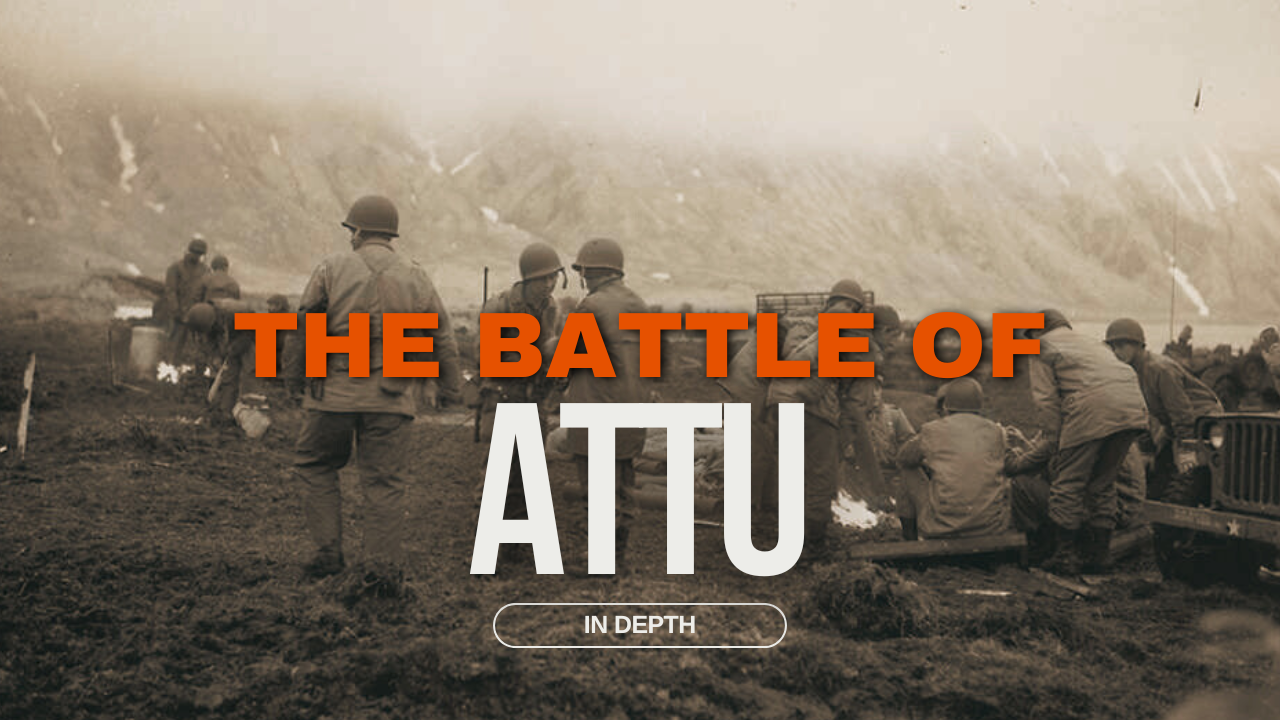
In a place known for its freezing cold volcanic terrain, impenetrable fog and impossibly strong popup gales, Attu Island in Alaska’s westernmost Aleutian Island chain was quite possibly the least conceivable locations for one of the deadliest battles of WW2, which in May of 1943, became the first time foreign invaders occupied American soil since the War of 1812. Known as the Forgotten Battle by American veterans who fought there, due in large part to extensive media coverage of the recent Guadalcanal Campaign, the Battle of Attu remains one of the most bizarre yet consequential conflicts in world military history.
Even before the Japanese entered the Second World War following their unprovoked attack on American naval assets and personnel at Pearl Harbor Hawaii, Japanese naval personnel had compiled significant intelligence on the Aleutian Islands, most likely due to comments made by U.S. General Billy Mitchell before Congress, when in 1935 he pronounced that “Whoever holds Alaska will hold the world. I think it is the most important strategic place in the world.” Several hundred miles from Russian soil, Japanese war planners opted to invade the remote Aleutian islands of Kiska and Attu, in an attempt to block the Americans from occupying the islands as a staging point for future attacks Japan’s home islands, instead hoping to use the islands as staging points for attacks on Alaska and the Pacific Northwest of the American mainland.
In 1942, commanding Admiral Isoroku Yamamoto committed a force of two non-fleet aircraft groups to the Japanese Northern Area Fleet. Led by Vice Admiral Boshirō Hosogaya, the two carrier groups included five cruisers, twelve destroyers, six submarines, four troop transports and auxiliary supply ships, with orders to conduct a series of air and amphibious attacks on Dutch Harbor, Adak, Kiska and Attu. What Yamamoto could not have known, however, was that the Americans had successfully broken the Japanese navy’s cipher code. Led by Commander Joseph Rochefort of the U.S. Navy’s Combat Intelligence Unit, working from their windowless basement offices at Pearl Harbor, by March of 1942, Rochefort’s unit had spent long hours and months on Japan’s naval code, which by the time of Yamamoto’s attack on the Aleutian Islands, the unit had completely mastered Japan’s secret code. Led by Admiral Chester Nimitz, commander-in-chief of the U.S. Pacific Fleet, when the deciphered Japanese playbook landed on his desk, Nimitz quickly notified the Alaskan North Pacific Area Command of the impending attack.
In response, the U.S. Army was able to notify Alaskan authorities about the upcoming attacks, which gave them enough time to evacuate some 1,000 native Aleuts from area villages to camps in mainland Alaska, yet when Japan launched its first wave of attacks at dawn on June the 3rd, 1942, Alaskan authorities ran out of time before they could evacuate the inhabitants on Attu. The Japanese first attack came at the U.S. possession of Dutch Harbor with 32 Japanese warplanes, including Zero fighters, B-5N torpedo bombers and D-3 Vals, targeting a radio station and petroleum tanks despite heavy fog, followed by army barracks at a Dutch Harbor naval base. Finding the American’s army facilities in the western Aleutians largely undefended, Hosogaya ordered additional strikes over the next three days, first on Kiska followed by amphibious invasion attacks on Attu on June the 7th, exactly six months after Japan’s attack at Pearl Harbor.
When Japanese forces from the 301st Independent Infantry Battalion landed unopposed on Attu, they captured 45 native Aleut islanders living in a scattered settlement around Chichagof Harbor, including an American couple, Charles Foster Jones, a radio technician from Ohio and his wife Etta, a schoolteacher from New Jersey. Most of the inhabitants who had survived the bombings were taken to a prison camp near Hokkaido Japan, although Charles Foster Jones was never seen again after his initial capture, while Etta Jones was taken to the Bund Hotel in Yokohama, which housed Australian war prisoners following Australia’s defeat at the Battle of Rabaul on Papua New Guinea in early 1942.
Even though the Aleutians were a largely uninhabited, remote outlier in the western fringes of Alaska, the American public responded with a mix of anger, shock and outrage that Japan now had a foothold on U.S. soil, many fearing that the Aleutians were just a stepping stone in advance of a full scale invasion of the Alaskan mainland, followed by an invasion of the Pacific Northwest. Despite the public’s concerns, American war planners at first paid little attention to Japan’s invasion of such a remote island chain, instead focusing their force buildup in the southern Pacific Ocean, following a string of morale busting defeats in the months following the Pearl Harbor attack.
By early May of 1942, the Japanese Empire had been in their triumphant phase of its expansionist campaigns in the Pacific, now in control of most of the western Pacific basin. They had crushed the British in Hong Kong, Malaya, Borneo and Singapore by February, along with the vital supply port of Rabaul at the tip of New Britain. The following month, the Dutch lost their vital oilfields on Sumatra and Java, while in April, Bataan had fallen to the Japanese, resulting in the largest surrender in American history, when 75,000 Filipino and American troops fell into Japanese captivity, leading to the Bataan Death March that took the lives of an estimated 17,000 Allied soldiers. In May, the besieged island of Corregidor had fallen, while British resistance in Burma ended in a humiliating retreat back to the Indian frontier. All in all, the Allies, it seemed were losing the war of the Pacific, with both India and Australia under eminent threat of invasion.
As for the Japanese forces now embedded on Attu and Kiska, over the coming months, Japanese soldiers quickly acclimated to the harsh weather conditions in the Aleutians, which cycled between rapidly shifting winds to dense fog to raging 100-mile-an-hour gusts that assaulted troops with biting rain. Well supplied by the Japanese Imperial Navy, soldiers built several bases on a number of Aleutian islands, until in March of 1943, during the Battle of the Komandorski Islands, the U.S. Navy managed to establish a blockade of Attu and Kiska that severely cut off the flow of inbound supplies to their troops on both islands, allowing the U.S. to secure the necessary sea lanes required for a successful counterattack on Attu.
Code named Operation Land Grab, on May 11th of 1943, elements of the 7th U.S. Infantry Division landed 15,000 soldiers on both ends of Attu, at Holtz Bay in the north and Massacre Bay in the south, at first encountering little to no resistance, since the Japanese commander in charge of the island, Colonel Yasuyo Yamasaki, had already moved his badly outnumbered garrison of 2,600 men inland to high ground on the island’s mountainous interior. Given the harsh weather conditions on Attu, underdressed American soldiers found themselves ill-equipped and ill-prepared for a concerted push into the mountains, as they bogged down with equipment failures and food shortages, in snow, fog, rain and mud, leading Attu veteran Lt. Donald E. Dwinall to recall that “It was rugged. The whole damn deal was rugged, like attacking a pillbox by way of a tightrope in winter.” Attu’s extreme conditions also led to hundreds of American GIs suffering from frostbite, gangrene and trench foot, ultimately inflicting more casualties from cold weather than enemy fire.
Yet as usual, American troops persisted with the aid of naval and aerial bombardment against Japanese high ground positions, and when reinforcements arrived with warmer clothing and new equipment, American GIs closed in on an enemy now desperate for ammunition and food, eventually pushing them out of the mountains and down toward the sea on the opposite side of the island.
While the vast majority of Yamasaki’s soldiers were ready to obey the Bushido Code first established by 12th century samurai warriors, electing to fall on their swords rather than surrender to defeat and dishonor, Yamasaki, unaware that reinforcements would not be coming, instead chose a surprise Bansai counterattack, with the hope of overrunning American artillery positions, only to use American artillery against American positions. Accordingly, on the night of May 29th, Yamasaki and his last remaining men attacked the now unified American position in one of the largest and most desperate Banzai charges in Pacific War history, driving through the American’s encampments with a hand-to-hand combat attack that far exceeded American readiness, penetrating all the way to support units in the rear of the American encampment, leading Captain George S. Bueller to comment years later, “What a nightmare. A madness of noise and confusion and deadliness.”
Even non-combat personnel like medics and engineers fought the enemy with rifle butts, bayonets and grenades—anything they could get their hands on—until U.S. commanders restored a semblance of order by repositioning available automatic weapons against Yamasaki’s charge. By sunrise on May 30th, the Japanese were reduced to uncoordinated pockets of resistance that were systematically put out of action, that also found a quite lifeless Yamasaki with his sword still in his hand. For the Americans, that battle saw 549 killed with 1,148 wounded, along with 1,814 men stricken by frostbite, gangrene, trench foot and sickness, all at a loss of 225 aircraft as well as several damaged naval vessels, while the Japanese saw 2,351 killed, 28 captured and an estimated 200 missing or listed as hold outs.
After the battle, Japan realized their remaining positions in Alaska had become untenable, leading the Japanese Northern Army to secretly abandon their sole remaining outpost in Kiska, officially ending the Japanese occupation of the Aleutian Islands on July 28th of 1943, making the Battle of Attu, a resounding Allied victory in their long push for Tokyo.