
Abraham Lincoln: Life & Legacy
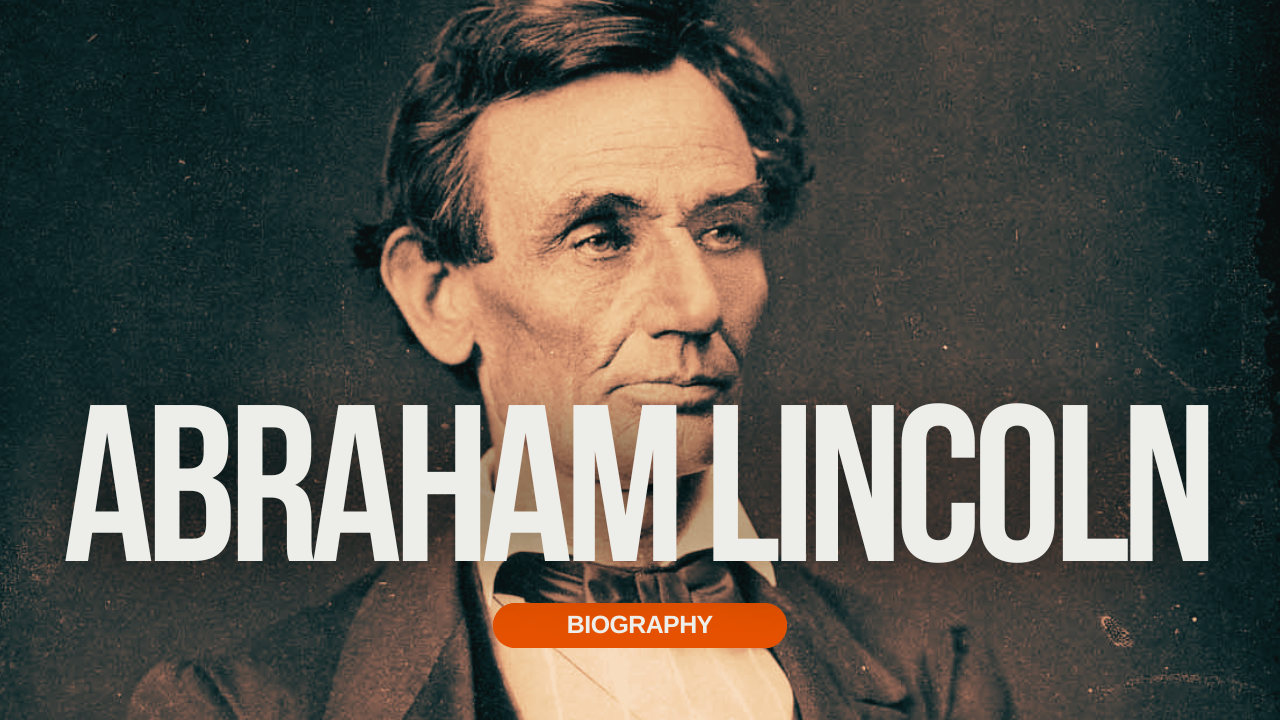
Born on February 12th of 1809 in Hodgenville Kentucky, to parents Tom and Nancy, Abraham Lincoln would face a string of early emotional tragedies that severely challenged his mental health as a youth and young man. In fact, historians point to multiple examples of young Abe’s relatives that point to a family tradition of depression and mental compromise, including his father, who pitchpoled from being a social man with a talent for jokes and stories, to one of melancholy and deep depression. His mother was also prone to depression, leading Abe in his later years to write that she was, “intellectual, sensitive and somewhat sad,” while her cousin John Hanks said her nature “was kindness, mildness, tenderness, sadness.”
Nor was the Lincoln family depression limited to Abe’s immediate family, since his great-uncle once told a court of law that he had “a deranged mind,” while Abe’s uncle, Mordecai Lincoln, also suffered from broad mood swings, leading one settler who knew both the future president and his moody male cousins to speak of the two “Lincoln characteristics” which gravitated between a great sense of humor and severe moody spells. Another first cousin of Abe’s had a daughter who looked strikingly like Abe, thirty-nine-year-old Mary Jane Lincoln, who was ultimately committed to the Illinois State Hospital for the Insane by her father, and when a jury was charged with answering the question of whether insanity ran in her family, they concluded that “the disease is with her hereditary.”
Abraham’s own depressions may have worsened under the severity of his early pioneer upbringing, when his only brother died in infancy in Kentucky. Two years later, his family moved to southern Indiana when Abe was eight, before milk sickness plagued the region with fatal consequences to his loved ones. At the time of the crisis on the midwestern frontier, the disease progressed rapidly from weakness and lassitude, to vomiting, coma and death, indiscriminately felling frontier settlers only during the warm months of summer. Now known as tremetol vomiting, caused by drinking milk from cows who had dined on native midwestern snakeroot that only bloomed in the summer months, Abe would lose his aunt and uncle to milk sickness, followed by his mother when he was nine.
Abe’s traumatic losses were only compounded when his father left his two remaining children, oldest Sarah and her younger brother Abe in the care of their 20-year-old cousin, Dennis Hanks, while Tom returned to Kentucky to court another bride. Returning six months later to find his children dirty and poorly clothed, Lincoln later described himself at the time as “sad, if not pitiful.” Young Abe’s one constant in life was his sister Sarah, but after she married in 1826 and left to set up a home of her own, on January 28th of 1828, she gave birth to a stillborn child and died herself shortly after giving birth. “We went out and told Abe,” recalled a neighbor. “I never will forget the scene. He sat down in the door of the smoke house and buried his face in his hands. The tears slowly trickled from between his bony fingers and his gaunt frame shook with sobs.”
Lincoln’s relationship with his father—Abe’s only other surviving member of his nuclear family—was so distant and cool that observers wondered if their was any love all between them. When Abe showed a strong interest in educating himself, at first his father helped him along by paying school fees and buying books, but after Abe’s studying began to interfere with his work demands on the farm, Tom Lincoln began beating his son for nearly every infraction the older man perceived, both real and imagined. Leaving home at age 22 to settle in New Salem, a small river bluff town in central Illinois, Abe became one of the best-liked men in the village, where even the town’s ruffians developed a fierce attachment to him after he bested each one of them in wrestling matches, displaying not only physical strength but a sense of fairness. Others were impressed by his wit and obvious intelligence, noticing, for example, how when he recited the poetry of Robert Burns, he even nailed the poet’s Scottish accent, emotional depth and humor. “He became popular with all classes,” noted Jason Duncan, a physician from New Salem.
When Lincoln was 23 years old, he declared himself a candidate for the Illinois General Assembly, and while he lost the race, he won nearly every vote in his precinct due to his overwhelming regional popularity. When Abe volunteered as a state militia soldier during the bloody Black Hawk War, his company elected him captain, again due to his immense popularity. Campaigning again for the state legislature in 1834—this time canvassing the entire state—Lincoln won his seat easily this time, and when a mentor in the legislature suggested he study law, Lincoln took up the challenge with his usual all-in vigor. At a time when all but five percent of American men in the midwest performed manual labor for a living, Lincoln studied law without the aid of an affiliation with a law school.
To earn money while studying, Lincoln and a partner opened a store by buying their inventory on credit, and when the store went bust, Lincoln found himself in dire financial jeopardy. To alleviate his despondency, some of his new high powered friends landed him several political appointments, first as New Salem’s postmaster and later as a deputy surveyor, which allowed him, in Lincoln’s own words, to procure “bread, and kept soul and body together.” His debt soon caught up with him when a creditor seized his surveying equipment, and when James Short saw that Lincoln was again despondent about the loss and heard him say he might “let the whole thing go,” Short bought new surveying equipment for Lincoln at a cost of $120, or some $2,500 in today’s currency.
In 1935, when an epidemic of most likely typhoid spread through the region, when Lincoln came down with the disease—what his doctors called bilious fever—they dosed him with mercury, quinine and jalap, which many historians believe deeply affected his mental health. Among others affected in the area were Lincoln’s friends the Rutledges, and while many believe Lincoln was romantically involved with the bright and beautiful Anna Mayes Rutledge, after she passed from typhoid, Lincoln’s mental state collapsed into total despair. “It was very evident that he was much distressed,” remembered Lincoln’s neighbor John Jones. “As to the condition of Lincoln’s mind after the death of Miss R., “Henry McHenry recalled, “after that event he seemed quite changed, he seemed retired, & loved solitude, he seemed wrapped in profound thought, indifferent, to transpiring events, had but little to say, but would take his gun and wander off in the woods by himself, away from the association of even those he most esteemed, this gloom seemed to deepen for some time, so as to give anxiety to his friends in regard to his mind.”
Lincoln “told me that he felt like committing suicide often,” remembered school teacher and friend, Mentor Graham, while another friend recalled that “Mr. Lincoln’s friends were compelled to keep watch and ward over Mr. Lincoln, he being from the sudden shock somewhat temporarily deranged. We watched during storms — fogs — damp gloomy weather . . . for fear of an accident.” Another villager said, “Lincoln was locked up by his friends . . . to prevent derangement or suicide.” People wondered whether Lincoln had fallen off the deep end. “That was the time the community said he was crazy,” remembered Elizabeth Abell.
Passing the Illinois bar exam in 1837, Lincoln moved to Springfield Illinois to join the John T. Stuart law firm, before partnering with William Herndon in 1844, and while he made an excellent living at Stuart’s, to supplement his income, he followed the state court as it made its rounds on the circuit to various county seats in Illinois. As railroads started moving west by the 1840s and 50s, Lincoln served as a lobbyist and attorney for the Illinois Central Railroad, where his success in the court room rapidly expanded his client base, including banks, insurance companies and manufacturing firms. He also worked as a criminal attorney, where in one trial of a man accused of murder, a witness claimed he had positively identified the accused due to the intense light of a full moon. Referring to a trusted almanac for the man’s defense, Lincoln exposed the fact that there had been no visible moon on the night of the murder, which ultimately ended in his client’s acquittal.
Asking for the hand of Mary Ann Todd in 1840—a wealthy Kentuckian from a slave-owning family, and a woman who had previously been courted by Lincoln’s future political opponent, Stephen A. Douglas—Lincoln broke off the engagement in 1841 for reasons that remain unknown to this day, only to reunite at a social engagement in 1842, which quickly led to their marriage on November 4th of that same year. Together they would raise four sons—Robert Todd, Edward Baker, William Wallace and Thomas or Tad, as he was known, yet sadly, as was the well worn pattern of tragedy in both Abe and Mary’s life, only Robert would survive to adulthood.
After a decades-long pause from Whig Party politics, Lincoln was elected to a single term in the U.S. House of Representatives from 1847 to 1849, which proved to be as unremarkable as it was brief, failing to attract any political alliances due to his opposition to the Mexican-American War. Realizing he had stepped on a hotbed issue back home, he opted not to run for a second term, instead returning to his law practice back in Springfield.
Lincoln’s formative years regarding slavery began during his time with the Illinois state legislature, where he viewed slavery not as a moral wrong, but as an impediment to economic development and the true potential of a nation. His position morphed dramatically after Congress passed the Kansas-Nebraska Act in 1854, which appealed the Missouri Compromise by allowing individual states and territories the right to decide whether they would allow slavery or remain a free state. The law sparked violent protests in both Kansas and Illinois, which in turn re-awakened a new political excitement in Lincoln, as well as a shift in his view of slavery to one of moral indignation, and while Lincoln in his heart felt that Black people were not equal to white, his belief in the right intentions of the founding fathers forced him to argue in public that all men were created equal with certain inalienable rights. His new stand on slavery also inspired him to challenge the sitting U.S. Senator for Illinois, Stephen A. Douglas.
Insert LD Debates here
During the summer and Fall of 1858, a series of seven debates in Illinois cities between U.S. senate incumbent Stephen A. Douglas and Abraham Lincoln, of the newly-formed Republican Party, drew national attention as they faced off over the evermore contentious debate regarding slavery in America. Aside from their stark physical differences—Lincoln was tall, rail thin and disheveled, while Douglas was short, stocky and expensively dressed—the two candidates traveled more than 4,000 miles during their respective campaigns—Lincoln by rail, carriage and boat, while Douglas traveled aboard a private train fitted with a cannon that fired upon his arrival into a new town.
Attracting as many as 20,000 people per debate, from their first meeting in Ottawa, Douglas accused Lincoln of running on a radical “Black Republican” antislavery platform closely linked to abolitionist Frederick Douglass, while Douglas backed the Jacksonian Democrats’ stance that the issue of free versus slave status was a state by state decision. Lincoln, on the other hand, maintained that only the federal government had the power to abolish slavery. “Why should Illinois be at war with Missouri,” Douglas asked, “or Kentucky with Ohio, or Virginia with New York, merely because their institutions differ? I believe that this new doctrine preached by Mr. Lincoln and his party will dissolve the Union if it succeeds.”
While Lincoln expressed his personal belief that whites were superior to Blacks, he based his anti-slavery stand on moral grounds only, stating that there was “no reason in the world why the negro is not entitled to all the natural rights enumerated in the Declaration of Independence, the right to life, liberty and the pursuit of happiness.” During their second debate at Freeport Illinois, Lincoln asked Douglas whether or not his popular sovereignty platform allowed settlers to deny slavery from a territory before it gained statehood, and when Douglas answered in the affirmative, his stance, now known as the Freeport Doctrine, alienated many Southerners, which led to his defeat in the presidential election of 1860. For his part, while Lincoln ultimately lost his bid for the senate, his eloquent speeches and moral reasoning during the debates gave him wide national exposure in the American press, leading to his successful bid for the White House in 1860, making the Lincoln-Douglas debates of 1858, a defining moment before a nation went to war with itself.
Lincoln’s performance in the debates of 1858 did much to boost his image and profile before the American public, leading operatives in his home state of Illinois to organize a campaign supporting Lincoln as the nation’s 16th American president in 1860, where he won out over better-known candidates at the Republic National Convention in Chicago, such as William Seward of New York and Salmon P. Chase of Ohio, based primarily on his moderate views on slavery, his resolve to fortify the nation’s infrastructure and his insistence on protective tariffs.
In a four-way race for the White House, Lincoln faced off with his friend and rival Stephen Douglas, John C. Breckinridge of the Northern Democrats and John Bell of the Constitution Party, receiving less than 40 percent of the popular vote, while capturing 180 of 303 Electoral College votes.
In advance of Lincoln’s inauguration in March of 1861, seven Southern states seceded from the Union, while a little more than a month after he took office, the newly-formed Confederate Army lay siege to the U.S. military installation of Fort Sumter in Charleston Harbor South Carolina, signaling the start of the American Civil War. In response to what would become America’s bloodiest war, Lincoln distributed $2 million from the Treasury for war supplies without an appropriation from Congress, before calling for 75,000 volunteers into military service without a formal declaration of war. He also suspended the writ of habeas corpus, which paved the way for the arrest and imprisonment of suspected Confederate State sympathizers without a warrant.
Emancipation Proclamation
The divide over slavery in America goes back decades before the Civil War, prompting Abraham Lincoln to declare in a landmark 1854 speech that “If the negro is a man, why then my ancient faith teaches me that ‘all men are created equal;’ and that there can be no moral right in connection with one man’s making a slave of another.” After hostilities broke out between the North and the South on April 12th, 1861, Congress passed the Militia Act of 1862, which allowed Black men to serve in the U.S. Army, followed by the Confiscation Act, which stated that all slaves seized from Confederate supporters were immediately made free.
Several days after the Battle of Antietam in September of 1862, Lincoln announced his preliminary Emancipation Proclamation to the public at large, which stated that the Confederate states had 100 days to rejoin the Union, before their slaves would be declared “thenceforward, and forever free.” When his 100-day warning lapsed without reunification, Lincoln signed his Emancipation Proclamation on New Years Day, 1863. At the same time, Lincoln understood that his decree applied only to territories not currently part of the Union states, but his proclamation’s symbolic stand shifted the North’s Civil War objectives from not only preserving the Union as a solitary nation, but for the abolition of slavery from American soil. At the same time, Lincoln’s Emancipation Proclamation also sent a strong message to France and Britain, who had both toyed with the notion of supporting the Confederacy in hopes of regaining a colonial foothold into North American.
Realizing that Lincoln’s Emancipation Proclamation would have no constitutional teeth after the end of the Civil War, Lincoln and the U.S. Congress began work on a constitutional amendment, which would formally abolish slavery under federal law. By the end of January 1865, both houses of Congress had passed the 13th Amendment, formally abolishing slavery or involuntary servitude, which was later ratified into law on December 6th, 1865.
Insert Gettysburg Address
On July 4th, 1863, Confederate General Robert E. Lee retreated into Virginia after the Battle of Gettysburg saw more than 37 percent of his 75,000-man army killed, missing or injured. A month later, Lee would hand his resignation to Confederate President Jefferson Davis, who promptly refused to accept the general’s defeated stand down, and while President Abraham Lincoln expressed his frustration that Union General George Meade failed to pursue Lee’s forces in retreat, he accepted an invitation to speak at the dedication of a National Cemetery at Gettysburg. On the morning of November 19th, after former secretary of state, U.S. Senator and Harvard College President Edward Everett delivered a two-hour dedication address, Lincoln took to the podium to deliver a two-minute speech that would later become known as the Gettysburg Address.
Before a gathered crowd of some 15,000 people, in less than 275 words, Lincoln expressed his conviction that the Civil War was the greatest test to the survival of the United States as created by the Declaration of Independence, noting quite eloquently that the Union dead who laid down their lives at Gettysburg had done so to ensure that “government of the people, by the people, for the people, shall not perish from the earth.” “But, in a larger sense,” Lincoln went on to say, “we can not dedicate—we can not consecrate—we can not hallow—this ground. The brave men, living and dead, who struggled here, have consecrated it, far above our poor power to add or detract. The world will little note, nor long remember what we say here, but it can never forget what they did here. It is for us the living, rather, to be dedicated here to the unfinished work which they who fought here have thus far so nobly advanced.”
While many of Lincoln’s essential themes in the Gettysburg Address were not new to his rhetoric and thinking, the most radical aspect of his speech was his assertion that the Declaration of Independence highlighted the founding father’s intentions more than the U.S. Constitution, since the later doctrine did not prohibit slavery, while the Declaration of Independence clearly expressed a dedication to the proposition that all men are created equal. Some time after Lincoln’s Gettysburg Address, Edward Everett would write the president, “I wish that I could flatter myself that I had come as near to the central idea of the occasion in two hours as you did in two minutes,” making the Gettysburg Address, one of the most impactful speeches in the annals of American history.
Election of 1864
Beginning with his meteoric rise to command in 1861, Maj. Gen. George B. McClellan, known as “Little Mac” for his Napoleonic dash and zeal, inspired the devotion of thousands in Union blue. By the middle of the war, however, McClellan’s failed 1862 Peninsula Campaign frustrated Union Army soldiers, prompting them to call for greater commitment from the home front. McClellan’s dismissal as Army of the Potomac field commander in November of 1862 stunned and saddened northern soldiers, but when Little Mac sided with the anti-war Democrats and ran for President, Union Army sentiment shifted away from McClellan in support of President Lincoln.
Following more bloodletting at Chancellorsville and Gettysburg, the depleted ranks of the Army of the Potomac voted overwhelmingly against Democrats in the gubernatorial contests of 1863. Demobilized enlisted men and junior officers from the Union Army rallied into the North’s major cities, forming social clubs in solidarity with likeminded veterans, toasting the prospects of victory, and marching in pro-war parades to sway the hearts of fence-sitters. Joining forces with war-ravaged veterans, torchlight parades filled city streets by night, each marcher convinced they were standard-bearers of righteousness against treason. Such partisan angst meant the parades and rallies were not always peaceful, such as the Democratic torchlight parade of October 29th, 1864, when a band of anti-war Democrats stormed a Republican club, setting off a full-scale brawl in the streets.
In the end, the Union soldier vote convincingly propelled Lincoln to a second term in office, effectively cementing victory and reunification with the rebel South firmly into the annals of American history. Approximately 155,600 soldiers cast votes in the 1864 presidential election—33,700 for McClellan compared to 116,800 votes for Lincoln, while the Union Army as a whole reported 80 percent voter participation. Even more compelling, every state but one gave Lincoln a solid majority of its combined Union Army votes. In fact, soldiers from most states gave the Union ticket at least a 20 percent higher turnout than their civilian counterparts at home, shining a light on the power of the Union Army, both on and off the field of battle.
Assassination
On April 9, 1865, after four years of bloody warfare that cost the lives of 620,000 Americans,
Confederate General-in-Chief Robert E. Lee and his Army of Northern Virginia officially surrendered to the Union Army of the Potomac under the commanding general of the United States. The surrender took place at the McLean House in Appomattox Courthouse, Virginia after one of the final battles of the Civil War. Less than a week later, the American nation would shudder at the loss of one of its most historic and impactful leaders.(…) On April 14, 1865, after a long day tending to the nation’s business, the 16th American President and his wife Mary went to Ford’s Theater in Washington, D.C. to take in the wildly popular stage play comedy Our American Cousin. Due to his national fame as a stage actor, Confederate sympathizer John Wilkes Booth maintained ready access to all parts of Ford’s Theater using his carte blanche access for the planned assassination of President Lincoln, Vice President Andrew Johnson, and Secretary of State William H. Seaward.(…) While Booth’s co-conspirator Louis Powell was tasked with killing Seaward, George Atsorod was tasked with killing the Vice President. Arriving late to the theater with Major Henry Rathbone and his fiancée Clara Harris, the play was interrupted so that the orchestra could play Hail to the Chief as the packed house of some 1,700 theatergoers rose in applause. As the play resumed, Booth, who knew the play by heart, entered the Lincoln Skybox from behind. Having his loan shot to coincide with one of the funniest lines of the play. As laughter peeled throughout the theater, Booth approached the President and shot him in the back of the head with a six-inch single-shot Derringer. The bullet entered Lincoln’s skull behind his left ear, passed through his brain, and came to rest near the front of his skull, fracturing both his orbital plates.
Major Rathbone jumped from his seat and struggled with Booth, who dropped his Derringer and drew a knife, stabbing Rathbone in his left forearm. Rathbone again grabbed at Booth just as the assassin jumped from the Skybox to the stage. A 12-foot drop, but not before one of his spurs became entangled with the Treasury flag decorating the Lincoln Skybox.(…) Booth’s fall to the stage was a painful one, landing him awkwardly on his left foot. But as he began to cross the stage, many in the audience thought he was part of the play and began to laugh.(…) Before Booth fled into the night, most eyewitness accounts indicate that Booth held up his bloody knife and yelled “Sick semper tyrannis,” which is Latin for “Thus always to tyrants.” With the help of three doctors in attendance that night, the comatose president was moved across the street to a first-floor bedroom in Taylor William Peterson’s house. More physicians arrived to offer aid, but the 16th president of the United States left this earth the following day at 722 in the morning.(…) Lincoln’s death was mourned around the world.(…) Hundreds of thousands attended his funeral procession through the streets of Washington, D.C. on April 19, followed by a 1,700-mile train ride procession from New York to Lincoln’s hometown of Springfield, Illinois, often passing trackside tributes in the form of bands, bonfires, and hymn singing. The hunt for the conspirators quickly became the largest in U.S. history, involving thousands of federal troops and countless civilians.(…) Booth was cornered by the 16th New York Cavalry while the assassin was sleeping in a barn in Virginia.(…) A lone soldier snuck up behind him and shot Booth in the back of the head, a just reprisal for what the assassin had done to the president of the United States. Many of Booth’s co-conspirators were freed after lengthy trials, while Mary Surratt, Louis Powell, David Harold, and George Atsorod were hanged by the neck on June 30, 1865.
Following their marriage, a devoted Lincoln watched helplessly as his wife developed illnesses and erratic behaviors, made worse by the death of their eleven-year-old son Willie to Typhoid Fever in 1862, followed by an 1863 head injury caused by a carriage accident that left her complaining of migraines. As the Civil War slogged on, President Lincoln’s depression worsened over the weight of his office and the heavy death toll taking place on American battlefields, while Mary’s worsened under the continuous death threats heaped upon her husband by pro-slavery southerners, who also labeled Mary a traitor to her own Southern roots. As for the president, historians now point to Marfan syndrome as the cause of his depression, which is an inherited genetic disorder that weakens the connective papillary muscles in the valves of the human heart; a condition frequently associated with depression.
After Lincoln’s assassination, Mary’s psychotic behavior worsened dramatically, further exacerbated six years later, when on July 15th, 1871, her fourth son Tad died at eighteen year of age, with a cause of death variously diagnosed as tuberculosis, pneumonia or congestive heart failure. The loss sent Mary off the deep end, as she combed the United States, Canada and Europe for spiritualists in hopes of communicating with her lost loved ones. As her mental health worsened, her eldest son Robert petitioned the courts until his mother was admitted against her will into Bellevue Place Sanitarium in Batavia, Illinois. After two suicide attempts at Bellevue, Mary was released into the custody of her sister Elizabeth in Springfield, Illinois, where she passed away from a stroke on July 16th, 1882, at 63 years of age, making the tragedies of Mary and Abe Lincoln, a latent testament to the pressures of their time.